


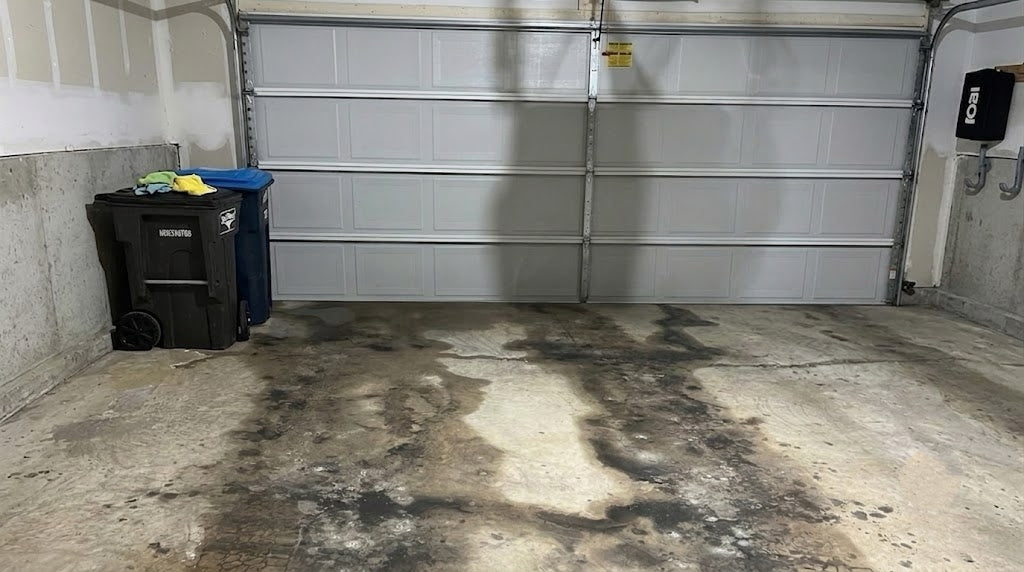
Your garage floor takes more abuse than most people realize.
Vehicles bring in snow, mud, rainwater, road salt, oil, dirt, leaves, and tire grime. Over time, an unprotected concrete floor can start to look stained, dusty, and harder to maintain.
There are three common ways homeowners protect a garage floor:
- PVC containment mats
- Absorbent garage mats
- Epoxy floor coatings
Each option has a place. The right choice depends on your climate, vehicle type, budget, and how much work you want to put into installation and maintenance.
This guide compares the options so you can choose the best fit for your garage.

Quick Comparison
| Option | Best For | Main Strength | Main Limitation |
|---|---|---|---|
| PVC containment mat | Snow, mud, road salt, water, oil, daily parking | Moveable protection with raised-edge containment | Needs correct sizing |
| Absorbent garage mat | Small drips and light moisture | Absorbs liquid on contact | Can hold moisture and require drying |
| Epoxy coating | Permanent floor finish | Clean, finished look across the whole floor | Requires prep, installation, and floor condition control |
Option 1: PVC Containment Mat
A PVC containment mat is designed to create a protected parking zone. Instead of permanently changing the garage floor, it sits on top of the concrete and helps contain the mess brought in by your vehicle.
DremGara is a PVC containment mat built for practical garage use. It uses 610GSM PVC, a waterproof surface, non-slip texture, and 1.2 inch raised edges to help manage snow, mud, road salt, water, and oil.
This type of mat is especially useful for:
- SUVs and pickup trucks
- Homes in snowy or rainy regions
- Garages exposed to road salt
- Families that use the garage as the main home entry
- Homeowners who want protection without construction
The biggest advantage is simplicity. You do not need to coat the whole garage floor. You do not need to wait for curing time. You can focus protection where the vehicle actually parks.
Option 2: Absorbent Garage Mat
An absorbent garage mat is designed to soak up liquid. These mats can work well for small drips, minor leaks, or areas where you want moisture absorbed instead of pooled.
They can be useful in light-duty situations, but they are not always the best fit for heavy snowmelt or road salt. If the mat holds moisture, it may need to dry properly. In messy winter conditions, it can also collect salt and grime in the fibers.
Absorbent mats are usually better for small wet areas than for full-size SUV or pickup containment.
Option 3: Epoxy Garage Floor Coating
Epoxy can give a garage floor a clean, finished look. It is a popular choice for homeowners who want a more permanent floor surface.
But epoxy is a different kind of solution. It usually requires surface preparation, proper application, curing time, and a floor that is suitable for coating. If the existing concrete has moisture issues, cracks, or contamination, the process can become more involved.
Epoxy can improve the whole floor's appearance, but it does not create raised-edge containment around a parked vehicle. Snowmelt and salty water can still move across the floor unless the garage has the right slope and cleanup routine.
For some homeowners, epoxy is the right long-term finish. For others, a PVC containment mat is the more practical daily protection.
Which One Handles Snow and Road Salt Best?
For snowy climates, containment matters.
When a vehicle comes in covered with snow, the water does not stay neatly under the tires. It melts from the body, wheel wells, bumper, running boards, and undercarriage. If road salt is mixed in, that runoff can leave residue across the garage.
A raised-edge PVC containment mat is designed for this kind of mess. DremGara's 1.2 inch raised edges help define a containment zone so winter runoff is easier to manage.
Absorbent mats can collect moisture, but they may not be ideal when a large SUV or pickup is shedding slush. Epoxy may protect the concrete surface, but it does not stop the water from spreading.
Which One Is Easiest to Live With?
Most homeowners want garage protection that does not create another project.
PVC containment mats are practical because they are focused and moveable. You protect the vehicle parking area, clean the mat as needed, and avoid turning garage floor protection into a renovation.
Absorbent mats may require more attention to drying and cleaning. Epoxy can look great, but installation and surface prep are more involved.
If your goal is to reduce weekly garage cleanup, a tough containment mat is usually the simplest path.
Which One Fits the DremGara Customer?
DremGara is built for homeowners who want a hard-duty, practical solution. The typical customer owns a home, parks an SUV or pickup, and wants to protect the garage from the kind of mess that comes with real weather.
This is not about making the garage fragile or decorative. It is about keeping the space under control.
If you want a product that helps manage snow, mud, road salt, water, and oil without committing to a permanent floor coating, a PVC containment mat is a strong choice.
Final Recommendation
Choose a PVC containment mat if you want practical, moveable, heavy-duty protection for daily parking.
Choose an absorbent garage mat if you mainly need to manage small drips or light moisture.
Choose epoxy if you want a permanent garage floor finish and are prepared for the installation process.
For homeowners with SUVs, pickups, snow, mud, road salt, or wet weather, DremGara offers a straightforward answer: a waterproof 610GSM PVC garage mat with non-slip texture and 1.2 inch raised edges built to keep the mess contained.
Share:
Built for Snow, Mud, and Road Salt: Why Raised Edges Matter in a Garage Mat
Stop Snow & Slush from Taking Over Your Garage