


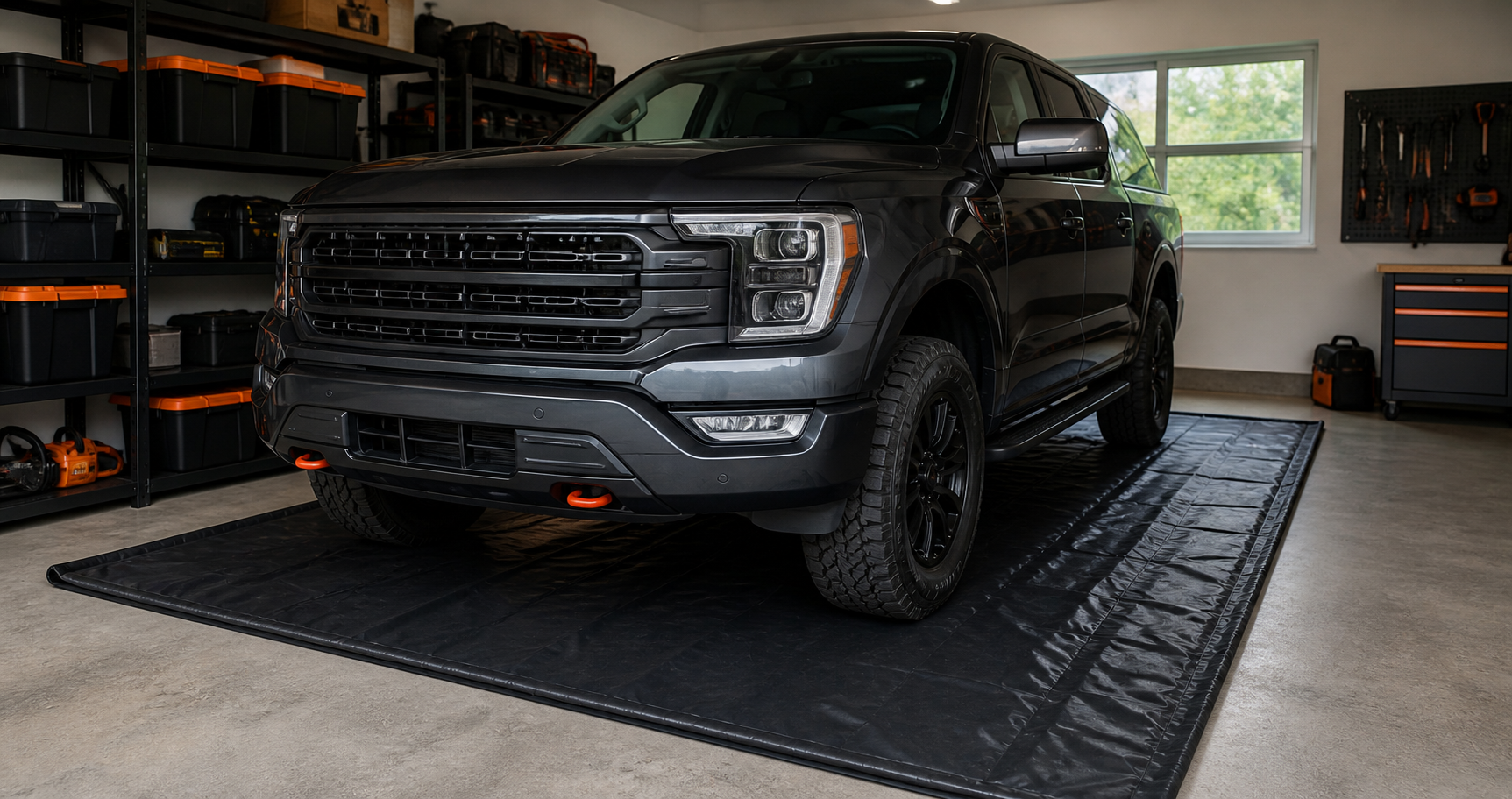
The right garage floor mat should do more than sit under your tires. It should cover the real mess zone: the area where snow melts, mud drops, road salt collects, and water runs after you park.
For many homeowners, especially families with an SUV or pickup truck, choosing a mat based only on vehicle length is a mistake. A garage mat that looks large enough on paper can still leave water, slush, and grime reaching the concrete around the edges.
DremGara is built for homeowners who want a tougher, more practical way to protect the garage. If you drive through rain, snow, gravel, dirt roads, or salted winter streets, use this guide before choosing your garage mat size.

Start With Your Vehicle, Not Just Your Garage
The first measurement is your vehicle footprint. Look up or measure:
- Overall vehicle length
- Overall vehicle width
- Tire-to-tire width
- Front and rear overhang
- Space needed to open doors comfortably
A sedan may fit on a smaller parking mat, but an SUV or pickup usually needs more coverage because the vehicle is taller, wider, and often carries more snow, mud, or rainwater into the garage.
Pickup trucks can also create a larger drip zone. Water can run from the wheel wells, bed, running boards, hitch area, and rear bumper. If the mat only covers the tire path, it may miss the areas where the mess actually lands.
Measure the Drip Zone
The drip zone is the area around your vehicle where water, snow, mud, and road salt naturally fall after parking.
For daily garage protection, your mat should extend beyond the tires and body line. This helps contain runoff from:
- Front bumper and grille
- Wheel wells
- Rocker panels and running boards
- Rear bumper and hitch
- Pickup truck bed edges
- Roof snowmelt on SUVs
As a practical rule, choose a mat that gives you extra width and length around the vehicle, not one that barely matches the vehicle dimensions.

Do Not Forget Door Clearance
Many homeowners measure only the vehicle and forget how the garage is used every day.
If you load groceries, kids' gear, tools, sports equipment, or pet supplies in the garage, door clearance matters. A mat that is too narrow may protect the tires but leave the area where people step wet and dirty.
For SUVs and pickups, extra side coverage can make the garage feel cleaner because you are stepping onto the mat, not onto cold concrete with slush or grit around it.
Match the Mat to Your Climate
The best garage mat size depends on where you live.
If your garage mostly sees light rain and dust, a basic footprint may be enough. But if you live in a region with snow, heavy rain, road salt, mud, or unpaved driveways, you should size up.
Snowbelt and Canadian homeowners should be especially careful. Snow stuck under an SUV or pickup can melt for hours after parking. That water often carries salt and grit, which can spread across the garage floor and leave stains or surface damage over time.
A larger containment mat gives that meltwater somewhere to stay until you clean it out.
Why Raised Edges Matter When Choosing Size
A flat mat protects the surface underneath it. A raised-edge containment mat helps keep water and debris from escaping.
DremGara uses 1.2 inch raised edges to help trap snowmelt, mud, road salt, water, and oil inside the mat area. This is especially important when sizing for larger vehicles because runoff can travel farther than expected.
When you choose your size, think of the raised edge as the boundary of your protection zone. Everything that lands inside that boundary is easier to manage. Anything that lands outside it can still reach your garage floor.
A Simple Garage Mat Sizing Checklist
Before choosing a size, answer these questions:
- What is the full length of your vehicle?
- What is the full width with mirrors folded?
- Do you drive an SUV, pickup, or larger family vehicle?
- Do you park indoors after snow, rain, mud, or road salt exposure?
- Do you need room to open doors and step onto the mat?
- Does your garage slope toward the door or toward the wall?
- Do you want to protect only tire tracks or the entire parking area?
If you are between two sizes, choosing the larger mat is usually the safer decision for snow, mud, and road salt protection.
Suggested Fit by Use Case
Use the table below as a starting point, then compare it with your confirmed DremGara size options.
| Vehicle / Garage Use | Sizing Direction |
|---|---|
| Compact car or sedan | Standard parking coverage may be enough |
| Mid-size SUV | Choose extra width for door and wheel-well runoff |
| Full-size SUV | Prioritize longer and wider containment coverage |
| Pickup truck | Size up for bed, hitch, running boards, and rear runoff |
| Snow or road salt region | Choose a larger raised-edge containment mat |
| Muddy driveway or outdoor work use | Choose broader coverage around the vehicle |
Garage Width Still Matters
Your mat needs to fit the garage, not just the vehicle.
Before ordering, measure:
- Distance from wall to garage door track
- Distance from storage shelves to vehicle parking area
- Clearance around steps, cabinets, or water heaters
- Whether the mat will interfere with the garage door seal
If you have a two-car garage, decide whether each vehicle needs its own mat or whether one larger protection zone makes more sense for the main daily driver.
The Bottom Line
The right garage floor mat size is not the smallest mat your vehicle can fit on. It is the size that protects the area your vehicle actually dirties.
For SUVs and pickups, that usually means choosing a mat with enough length, width, and raised-edge containment to handle snowmelt, mud, road salt, water, and oil after every drive.
DremGara is designed for homeowners who want a tough, practical garage protection solution without turning garage maintenance into a weekly chore. Measure your vehicle, measure your garage, and choose the mat that protects the full mess zone.
CTA: Find your DremGara size and protect your garage before the next storm.
Share:
Block Mud & Road Salt Before They Stain Your Garage